It’s a little after one in the morning and you’re doing the math again. The business is good — real clients, real revenue, a reputation it took decades to earn — and yet here you are, awake, running the same private arithmetic: I sold, so where is the money, and how do I make payroll on Friday? Nobody warned you the questions would get harder as the business got better.
They get harder because you were handed the wrong picture of what a business is. We were all taught it’s a machine — a set of parts you assemble, a lever you pull harder when you want more out. So when it strains, you reach for the machine’s answers: more hours, more force, more selling. And the strain doesn’t ease, because a business was never a machine. It’s a living system. You don’t assemble a garden; you prepare the soil, you plant, and then most of the deciding work happens underground, in the dark, at a pace that isn’t entirely yours.
Every answer I have to those 1am questions starts from that one correction. Not a machine. A living thing. The rest is just paying honest attention to what that means.
The part you can’t see is the part that’s keeping you up
Everyone admires the mushroom — the visible thing, the product, the craft people praise. But a mushroom isn’t the organism. The organism is the mycelium: the root network threaded through the soil, invisible, doing the actual living. And here is why that matters at one in the morning. Every single thing on your list of worries lives underground. Payroll that runs on your guilt instead of a calendar. Money earned and never collected. Prices you set years ago and never raised. Work you’re afraid to turn down because nothing is written down that says you can. None of it is a product problem — the product is usually excellent. It’s a root problem. Which is exactly why working harder on the visible part, the part everyone can see, never once quiets the 1am voice.
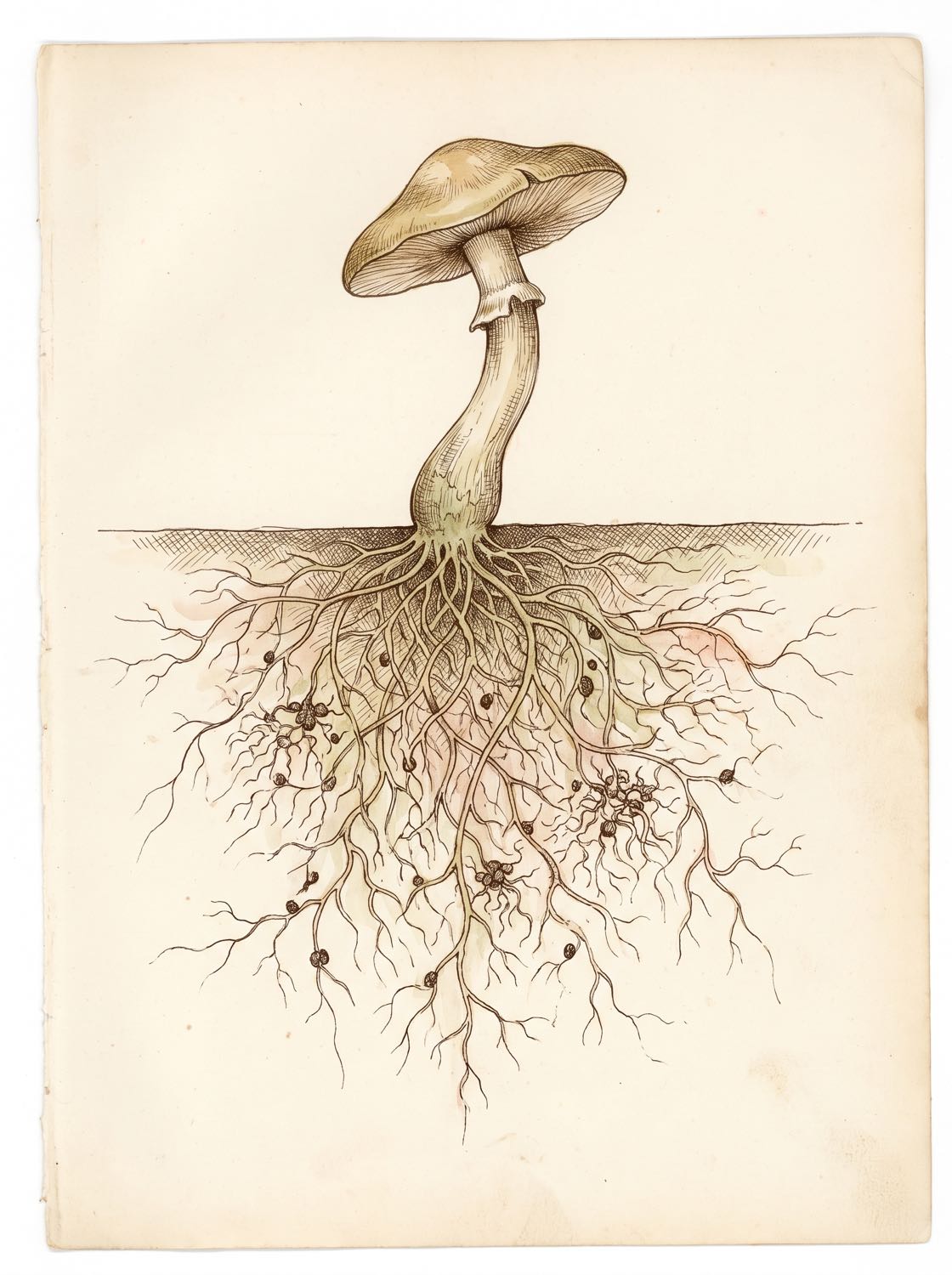
Why it can feel like captivity instead of success
Most founders started with the thing they were good at and built upward. So the visible part is beautiful and the underground part never got built — and without roots, the whole plant runs on one thing: your hands, in every corner, all the time. That’s the quiet horror a founder feels and can’t name. The business isn’t failing. It simply can’t survive being set down. You can’t take the two weeks. You can’t plan the family vacation, or watch the game, or turn down the work you don’t even want. The business is working and holding you captive in the very same motion, and no one warned you those two things arrive together. A business that depends entirely on its founder is the most convincing thing in the world — right up until the founder tries to leave, and everyone finds out there were never any roots, only hands.
What roots would actually change
The way out isn’t working harder on the flower. It’s building soil — the terms, the cadence, the structure, the knowledge written down instead of carried in your head — so the business grows roots and can feed itself. A business with roots survives you leaving for two weeks. Or for good. It can be handed on, or sold someday, or simply set down for a while without dying in the vase. The finance word for that is exit readiness, and it sounds colder than the thing actually is. What it really means is: you built something alive enough to keep growing when the gardener walks up to the house. Almost nobody builds for it, because it means doing the invisible underground work in the seasons when the visible work is the part that feels like progress.
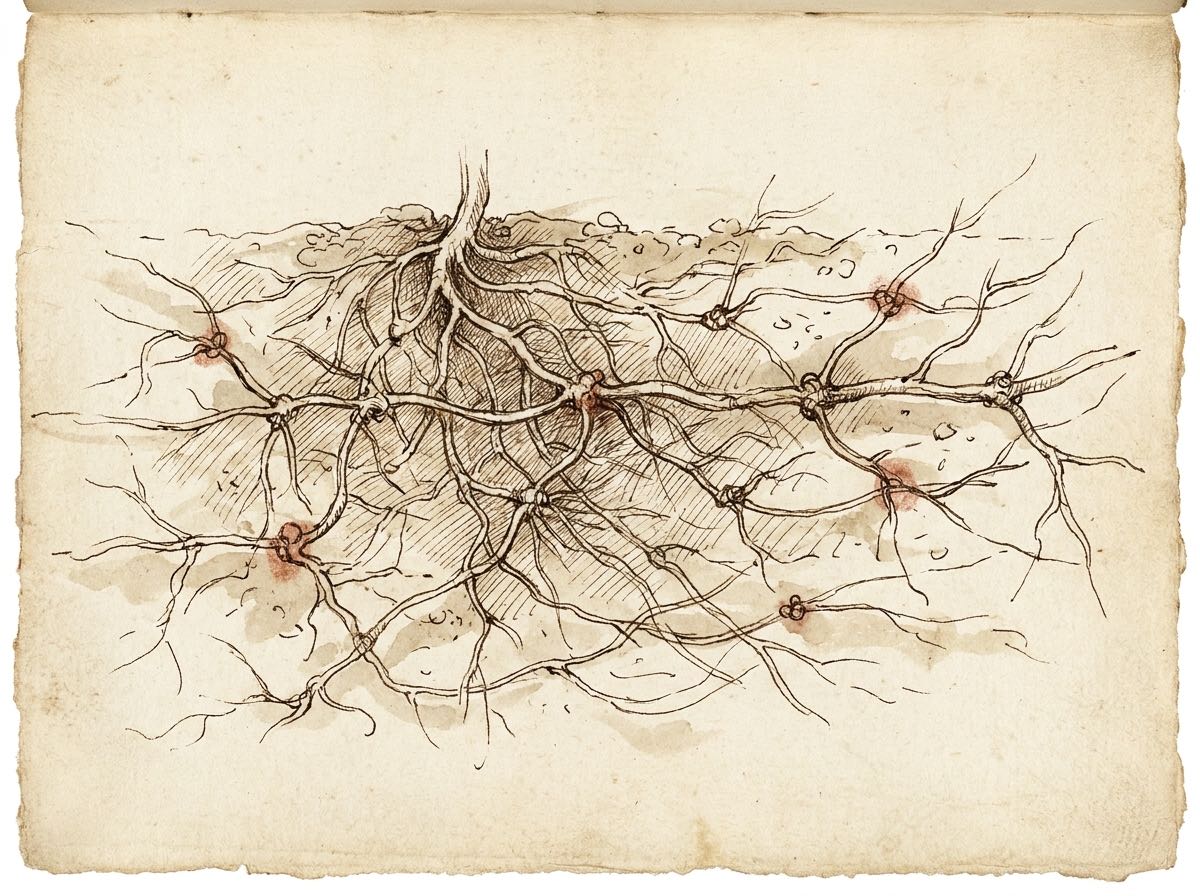
Why good money can still feel like an emergency
Because we measure the wrong thing. Revenue is a mushroom count — it tells you what the organism pushed up this season and nothing about whether the roots can survive one bad month. I once worked beside a brilliant specialist, one of the best in the world at a very hard, technical thing,He could read the numbers of any business except his own. whose firm looked successful by every visible measure while he couldn’t reliably make payroll. The mushroom count was fine. The soil was a disaster. So here is the number I actually watch: ease. A business is doing well when it generates ease — for everyone in it, the owner most of all — instead of running on one person’s refusal to sleep. When I fixed that firm, the changes were almost embarrassingly ordinary: bill on a calendar, take payment before the work starts, let someone unembarrassed do the collecting. Payroll never missed again. What I actually gave him wasn’t a spreadsheet. It was the exhale. He handed his anxiety to a structure that could hold it and got his genius back. That exhale is the KPI. Everything else is a proxy for it.
You’re allowed to want enough
I’ll say plainly that I’m the ease person, not the high-profit person, because it sends the wrong readers away early and keeps the right ones. If the whole point is to 10x everything and wring the last drop out of the team and the terms, we’re going to frustrate each other, and better we learn that now.
Because “enough” is a legitimate goal. A business that pays you well, runs without breaking you, pays everyone in it excellently — as well as you pay yourself — and could be sold or handed on someday is not a consolation prize. It’s the thing most founders quietly wanted before someone convinced them more was the only permitted direction. And none of this is anti-money — I loved the money, first class and all of it. Money is energy, and energy is supposed to move. Spending isn’t the enemy; spending you haven’t earned yet is. You don’t get there by white-knuckling every expense down to nothing — you get there by selling enough to cover what you spend, and then some. Be more useful, build more, help more, and let the money circulate. But the point of the circulation is a life. The business exists to fund the life, and somewhere in the busy years that arrow quietly reverses, and the life starts funding the business — in hours, in health, in the family vacations you couldn’t plan. Turning that arrow back around is most of my job.
The fear underneath the fear
Living things end. That’s the part the machine picture can’t hold and the living one takes for granted — and it’s the deepest thing awake at 1am, the one you don’t say out loud: if I’m the roots, then everything stops the day I do. A founder-dependent business is, underneath all the busyness, a quiet way of not looking at that. If I never build the roots, I never have to picture the garden without me. If I stay irreplaceable, I get to feel permanent. It’s a deeply human bargain, and it’s a slow way to lose the very thing you built, because the one event you refused to plan for is the only one that’s certain. Build so the business can outlast your grip on it and the fear loses its teeth. The strange gift on the far side is this: a business that could survive your absence is the first one you actually get to enjoy being present for.
None of this is soft, for all the soft words. Soil and roots are how I stay honest about money, not how I avoid it. The dials still get turned by hand; the outreach still gets made; the terms still get written down. But the frame underneath all of it is the living one — and if this reads like the first accurate description of your nights you’ve come across in a while, then you already know the underground work is waiting, and has been for years.
Where it starts
It starts with The Owner’s Review. An afternoon of questions you have never been asked, alone, nobody watching — and at the end, two documents: one that tells you exactly which drawer to open, and one so honest it never leaves your hands. $497. It’s there when you’re ready.
— Susan Callender